

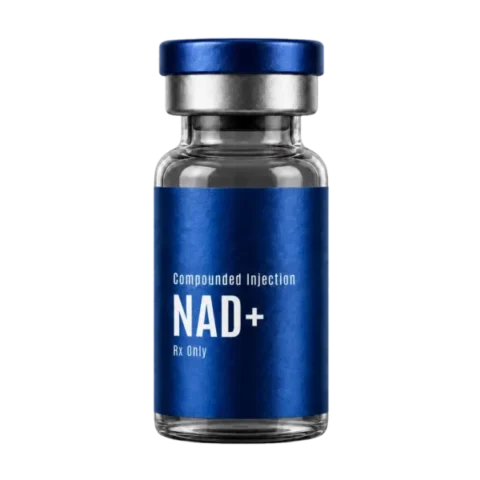
NAD+ injections have moved from a niche longevity clinic offering to something people actively search for by name. But before booking a session, it’s worth understanding exactly what you’re getting, what the research actually supports, and a real FDA safety event you should know about.
Table of Contents
- What Is NAD+?
- How NAD+ Injections Are Administered
- What the Research Actually Shows
- FDA Regulatory Status and a Real Safety Recall
- Side Effects and Who Should Avoid NAD+
- NAD+ Injections vs IV Therapy
- How to Choose a Provider
- How Momentum Health 360 Can Help
- FAQs
Key Takeaways
- NAD+ injections deliver nicotinamide adenine dinucleotide, a coenzyme every cell uses for energy production, directly into the body via subcutaneous or intramuscular injection.
- NAD+ is not FDA-approved for any medical indication, and in 2025 the FDA issued a Class I recall — its most serious classification — for a compounded NAD+ injectable product after patients developed serious adverse reactions.
- Most human clinical evidence supporting NAD+ benefits comes from oral precursor studies (NMN, NR), not from injectable NAD+ itself.
- Common side effects are usually mild (headache, nausea, flushing), but people with cancer history, pregnancy, or severe liver/kidney disease should avoid it.
What Is NAD+?
NAD+ (nicotinamide adenine dinucleotide) is a coenzyme found in every cell in the body that plays a central role in converting food into usable energy and repairing DNA. It’s not something you take in the way you’d take a vitamin — your body already produces it constantly. What NAD+ injections and infusions aim to do is supplement or boost the levels your cells already maintain, based on research showing NAD+ levels decline with age.
How NAD+ Injections Are Administered
NAD+ injections are typically given subcutaneously or intramuscularly in small, frequent doses, while IV infusions deliver a much larger dose directly into the bloodstream over 30 minutes to several hours. Clinics offering NAD+ therapy usually let patients choose based on their goals: injections for a quick, low-dose maintenance routine, or IV sessions for a more intensive, occasional boost.
Dosing protocols vary significantly between providers, since there’s no FDA-approved standard to follow. A 2019 pilot study published in Frontiers in Aging Neuroscience administered 750 mg of NAD+ by IV over six hours — a considerably higher and slower-delivered dose than what most injection-based clinic visits provide.
What the Research Actually Shows
Most of the strongest human clinical evidence for NAD+’s benefits comes from studies of oral NAD+ precursors — nicotinamide riboside (NR) and nicotinamide mononucleotide (NMN) — rather than from injectable NAD+ directly. This is an important distinction that’s easy to miss in marketing materials.
Research on oral NR and NMN has shown these precursors are generally safe and do measurably raise blood and tissue NAD+ levels in humans. Studies in animal models have gone further, showing that NR supplementation improved insulin sensitivity and mitochondrial mass in skeletal muscle, and that various NAD+ precursors extended lifespan in simpler organisms like C. elegans and Drosophila. These findings are promising, but they largely haven’t been replicated in large-scale human trials specifically using the injectable form.
Newer clinical work is starting to close this gap directly. Two Phase 1 pilot trials evaluating NAD+ and NR delivered by injection (across intramuscular, intravenous, and subcutaneous routes) have been conducted, with results focused primarily on establishing safety rather than measuring specific benefits like energy or cognition. This is where the field currently stands: safety data for injectable NAD+ is accumulating, but robust evidence for specific outcomes — more energy, sharper focus, slower aging — is still thin compared to what exists for oral precursors.
FDA Regulatory Status and a Real Safety Recall
NAD+ is not FDA-approved for any medical indication, and injectable NAD+ products are typically compounded rather than manufactured under an approved drug application — which means quality and sterility depend entirely on the individual compounding pharmacy.
This isn’t a theoretical concern. In 2025, the FDA issued a Class I recall — its most serious recall classification, reserved for situations where a product may cause serious or life-threatening health consequences — for a compounded NAD+ injectable product manufactured by GenoGenix, LLC. According to the FDA’s own warning letter, three patients developed low blood pressure, uncontrollable shaking, and body aches shortly after receiving NAD+ from the same vial lot, and were directed to the emergency room. Testing later found the product contained excessive bacterial endotoxins — a serious contamination issue that can trigger severe inflammatory reactions or sepsis. The FDA also found the facility had been compounding NAD+ using bulk substances not on its approved list for that type of facility, and had failed to perform adequate finished-product testing before releasing the product.
This single event illustrates the real-world risk of unregulated compounding in this space: NAD+ injectables aren’t inherently dangerous, but the specific pharmacy preparing them matters enormously, since there’s no FDA approval process verifying safety and purity the way there is for standard prescription drugs.
Side Effects and Who Should Avoid NAD+
Most people tolerate NAD+ well, with side effects limited to mild headache, nausea, dizziness, or injection-site irritation — though rapid IV administration can cause flushing, low blood pressure, and a racing heart due to vasodilation.
| Consideration | Why It Matters |
|---|---|
| Cancer history | NAD+ may fuel rapid cell metabolism (the Warburg effect) and interfere with cancer treatment — avoid entirely, not just monitor |
| Pregnancy or breastfeeding | No safety data exists for either population |
| Severe liver or kidney disease | NAD+ is metabolized through these organs |
| Unstable cardiovascular disease | Rapid IV delivery can affect blood pressure and heart rate |
There’s no formal boxed warning on NAD+, since it isn’t an FDA-approved drug in the first place — but these contraindications come directly from how NAD+ behaves biologically, not from a lack of caution on providers’ part.
NAD+ Injections vs IV Therapy
Injections deliver a smaller dose quickly and are suited to a regular, ongoing routine; IV therapy delivers a much larger dose over a longer session and tends to appeal to people seeking a more intensive, occasional boost. Neither format has been shown in controlled research to be definitively “better” — the difference mainly comes down to dose, convenience, and cost per session, which is worth exploring further if you’re deciding between the two.
How to Choose a Provider
Given the FDA recall above, the single most important question to ask any NAD+ provider is which compounding pharmacy prepares their product, and whether that pharmacy is properly licensed and has a clean inspection history. A provider who can’t or won’t answer this clearly is a meaningful red flag. Beyond sourcing, look for a licensed medical provider overseeing your intake (not just a technician administering the injection), transparent dosing, and a willingness to discuss the contraindications above based on your actual health history.
How Momentum Health 360 Can Help
Momentum Health 360 offers NAD+ therapy under its Energy & Mood category, sourced through licensed, vetted pharmacies, with providers who can walk you through dosing options and whether it fits your health profile as part of its broader telehealth weight loss program.
Related Reading
- NAD+ IV Therapy vs Injections: Which Delivery Method Works Better?
- Lipotropic MIC + B12 Injections: Do They Actually Boost Energy?
FAQs
Q: Is NAD+ therapy FDA-approved? A: No. NAD+ is not FDA-approved for any specific medical indication, and injectable NAD+ products are typically compounded rather than manufactured under an approved drug application.
Q: Was the FDA recall specific to one pharmacy, or all NAD+ products? A: The 2025 Class I recall was specific to a product from GenoGenix, LLC. It doesn’t mean all NAD+ products carry the same risk, but it does underscore why pharmacy sourcing and quality control matter significantly in this category.
Q: How is NAD+ typically dosed? A: Dosing varies widely by provider since there’s no FDA-approved standard. Clinical research has used doses as high as 750 mg by IV over six hours, but typical clinic injections are much smaller and more frequent.
Q: Can I take NAD+ if I have a family history of cancer but no personal history? A: The main concern relates to active cancer or personal cancer history, given NAD+’s role in fueling rapid cell metabolism. A family history alone is a conversation worth having directly with your provider.
Q: Do NAD+ injections and oral NAD+ precursor supplements do the same thing? A: They aim for a similar outcome (raising NAD+ levels) but aren’t interchangeable — oral precursors like NR and NMN currently have more human clinical safety and efficacy data behind them than injectable NAD+ does.
This article is for general informational purposes only and is not a substitute for professional medical advice, diagnosis, or treatment. NAD+ is not FDA-approved for any specific medical indication. A licensed provider, such as those available through Momentum Health 360, can help determine whether NAD+ therapy is appropriate for you and can confirm the sourcing and safety practices of the pharmacy involved.
Sources
- U.S. Food and Drug Administration. Warning Letter: GenoGenix LLC – 718739. FDA.gov. 2026.
- Nkrumah-Elie, Y., et al. Preliminary Safety Analysis of Two Pilot Clinical Trials Involving Injections of Niagen, Nicotinamide Riboside Chloride. medRxiv. 2026.
- Various. NAD+ Injections: Benefits, Safety, and What to Know. testing.com.